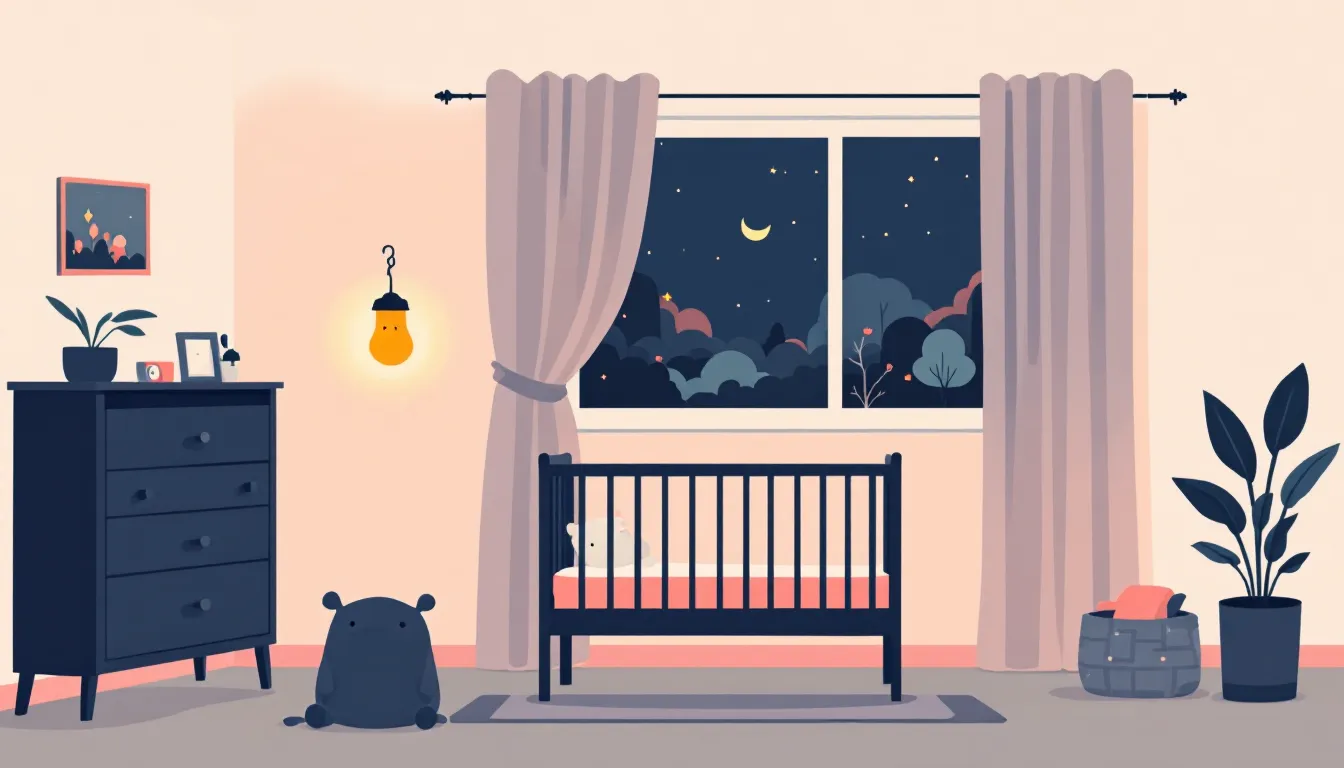
When the Room Is Too Bright to Sleep: A Parent's Guide to Light & Bedtime
Struggling with a bedroom too bright for baby sleep? Learn why darkness matters for melatonin, what's 'dark enough,' and practical solutions for every sleep space.
It's 7:30 PM in June. Your toddler's bedtime routine is complete, but sunlight still streams through the bedroom window. Despite blackout curtains, light sneaks around the edges. Your little one pops up repeatedly, wide awake, insisting it's still daytime.
Sound familiar? You're not alone. Light is the single most powerful external cue telling our brains when to sleep and when to wake. And for babies and toddlers with developing sleep systems, even small amounts of light can derail bedtime completely.
Let's dive into the science of why darkness matters so much for little ones, and more importantly, how to achieve it in any sleep space.
The Melatonin Connection: Why Light Sabotages Sleep
Your Baby's Internal Clock
Here's what's happening in your child's brain when light enters their room:
The melatonin cascade:
- Light hits special cells in the retina called intrinsically photosensitive retinal ganglion cells
- These cells signal the brain's master clock (the suprachiasmatic nucleus)
- The brain suppresses melatonin production, your child's natural "sleepy hormone"
- Result: A wide-awake baby when they should be drowsy
The kicker? Babies and toddlers are even more sensitive to light than adults. Research from the University of Colorado Boulder found that preschoolers exposed to bright light before bed showed an 88% drop in melatonin levels, nearly double the suppression seen in adults.
Blue Light: The Worst Offender
Not all light is created equal when it comes to sleep disruption:
- Blue light (480nm wavelength): Maximum melatonin suppression
- Green light: Moderate effect
- Red/amber light: Minimal impact on sleep hormones
This is why that crack of daylight under the door is more disruptive than a dim red nightlight.
What's "Dark Enough" for Baby Sleep?
The Cave Test
Sleep consultants often recommend the "cave test" for ideal darkness:
Can you see your hand in front of your face?
- If yes: Too bright
- If no: Perfect for sleep
On a more technical level, sleep researchers recommend:
- Nighttime sleep: 0-5 lux (essentially pitch black)
- Naptime: Can be slightly brighter, but under 10 lux is ideal
For reference, a full moon provides about 0.3 lux, while a typical living room at night measures 50-150 lux.
Age Considerations
Newborns (0-3 months):
- Can sleep in brighter conditions initially
- By 8-12 weeks, darkness becomes more important as circadian rhythms develop
Babies (3-12 months):
- Need consistent darkness for naps and nighttime
- Light sensitivity increases as sleep patterns mature
Toddlers (1-3 years):
- Maximum sensitivity to light disruption
- May need darkness even during quiet time
Practical Blackout Solutions That Actually Work
Window Treatments: Beyond Basic Curtains
The gold standard setup:
- Cellular blackout shades mounted inside the window frame
- Floor-length blackout curtains extending 6+ inches past the frame
- Velcro strips or curtain wrap to seal edges
One parent's game-changer: "We used adhesive Velcro strips around our window frame and attached our blackout curtains directly to them. Zero light leaks!"
DIY Solutions for Immediate Relief
Tonight's emergency fixes:
- Aluminum foil: Temporary but 100% effective (spray window with water, foil sticks instantly)
- Black trash bags: Tape to window frame for travel or temporary solution
- Painter's tape + black poster board: Removable and renter-friendly
The travel hack:
- Portable blackout shades with suction cups: Pack flat, work in hotels
- Black electrical tape: Seal curtain gaps and cover LED lights
- SlumberPod or similar blackout tent: For pack-n-plays and travel cribs
Dealing with Light Leaks
Common culprits and fixes:
- Under the door: Draft stoppers or rolled towels
- Around curtains: Curtain wrap or additional rod extenders
- LED lights: Black electrical tape or LED blocking stickers
- Smoke detectors: LED dimming sheets (safe and removable)
Naps vs. Nighttime: Do the Rules Change?
The Nap Debate
Sleep experts are divided on naptime darkness:
Team Pitch Black argues:
- Consistent sleep environment improves all sleep
- Darker naps are often longer and more restorative
- Prevents early morning confusion ("Is it time to wake up?")
Team Moderate Light suggests:
- Helps distinguish day from night sleep
- May prevent too-long afternoon naps
- Easier for daycare/on-the-go situations
The research says: Most studies support darkness for naps, especially for babies over 4 months who've developed clear circadian rhythms.
Finding Your Balance
Start with full darkness and adjust based on your child:
- Short nappers often extend sleep in darker rooms
- Long nappers might do fine with filtered light
- Consider age: younger babies are more flexible than toddlers
When Light Isn't the Only Problem
Sometimes you achieve cave-like darkness but sleep doesn't improve. Check these factors:
Temperature:
- Ideal range: 68-72°F (20-22°C)
- Too warm disrupts sleep as much as light
Sound:
- White noise can mask external disruptions
- Volume should be 50-60 decibels (like a soft shower)
Timing:
- Even in darkness, overtired children struggle to fall asleep
- Watch wake windows and sleepy cues
Medical issues:
- Sleep apnea, reflux, or sensory sensitivities
- Consult your pediatrician if sleep problems persist
Making Peace with Seasonal Changes
Summer Sleep Challenges
The long daylight dilemma:
- Maintain consistent bedtime despite sunshine
- Start dimming lights 1-2 hours before bed
- Consider "reverse curtains" outside to shade windows
One Minnesota mom's strategy: "We do 'pretend nighttime' starting at 6 PM in summer. Dim lights, quiet activities, and lots of 'the sun is confused' explanations."
Winter Considerations
The morning darkness challenge:
- Use sunrise alarm clocks for gentle wake-ups
- Open curtains immediately at desired wake time
- Bright light exposure during breakfast
Creating Your Darkness Action Plan
This Week's Checklist
- Assess current darkness: Do the hand test tonight
- Identify light sources: Check for LED lights, gaps, outside light
- Choose your solution: Permanent (new curtains) or temporary (foil/tape)
- Test and adjust: Your child's sleep will tell you if it's dark enough
- Be consistent: Same darkness for all sleep times
Signs It's Working
Within 3-5 nights of achieving true darkness, watch for:
- Faster sleep onset (less than 20 minutes)
- Fewer night wakings
- Later morning wake times
- Longer naps
- Less bedtime resistance
Your Questions Answered
"My toddler insists on a nightlight. What should I do?"
Start with the dimmest, reddest light possible. Place it low and away from their direct line of sight. Gradually dim or move it farther away over time.
"What about baby monitors with night vision?"
Most use infrared light invisible to the human eye. These won't affect sleep. Cover any visible LED indicators.
"My baby naps great in the bright living room but won't nap in their dark nursery. Help!"
This is often about sleep associations, not light preferences. Gradually darken the living room for naps while working on nursery nap practice.
The Bottom Line on Bedroom Brightness
Light is powerful, powerful enough to override even the strongest sleep drive in tired children. But here's the encouraging truth: darkness is one of the easiest sleep problems to solve. Unlike sleep training or schedule changes, you can fix light issues tonight.
Start with the quickest solution that works for your situation. Even aluminum foil and tape can transform your child's sleep while you plan a more permanent fix. Because when it comes to toddler bedtime battles and bedtime routines that actually work, darkness isn't just helpful, it's foundational.
Ready to tackle those sleep challenges? Momwise is here to help with personalized sleep schedules, troubleshooting tips, and judgment-free support for whatever keeps you up at night (besides your little one). Download Momwise and let's get everyone sleeping better.
Remember: Every child is unique. What works for one may need tweaking for another. The key is consistency and patience as you find your family's sleep sweet spot.
Momwise handles the chaos so you don't have to
Scheduler, Meal planner, Sidekick and Househand take the calendar, dinner and to-dos off your plate. Try your village free for 3 days, no card.
You might also like
The Nap-on-the-Go Playbook: Strollers, Cars, and Carriers
Learn how to get baby to nap on the go safely. Expert tips on when motion naps work, safe sleep rules, transferring sleeping babies, and recovering your schedule.
Why Bedtime Is a Battle (And How to Call a Truce)
The psychology behind toddler sleep resistance and practical strategies that actually work. No more hour-long bedtime sagas.
The 5-Minute Bedtime Routine That Actually Works
Forget the 45-minute bedtime sagas. Here's a simple, repeatable routine that gets your toddler to bed without the nightly battles, perfect for exhausted parents.