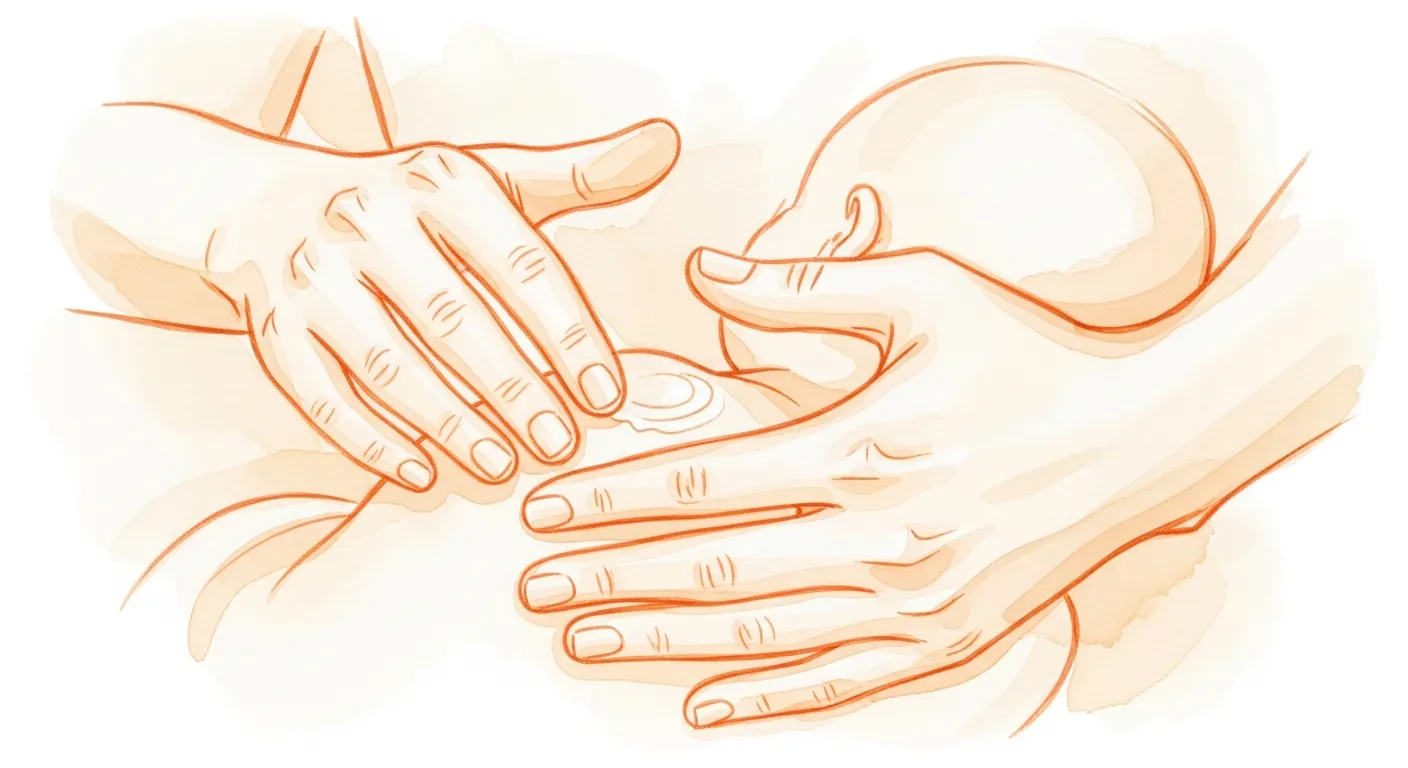
How to Tell Heat Rash from Eczema Baby: A Parent's Visual Guide to Common Skin Conditions
Learn to identify heat rash vs eczema, contact dermatitis, hives, and other baby rashes with this visual guide. Know what to look for, when to worry, and what to do.
You're changing your baby's diaper and notice red bumps on their chest. Or maybe there's a patchy rash on their cheeks that wasn't there yesterday. Your first instinct? Panic. Then Google. Then more panic.
Here's the thing: baby rashes are incredibly common, but they're not all created equal. That angry-looking rash might be as harmless as heat rash that'll disappear by bedtime, or it could be eczema that needs proper management. The trick is knowing which is which.
Before we dive into the differences, here's what every parent needs to know: according to pediatric dermatologists, about 40% of babies develop heat rash due to their underdeveloped sweat glands, while eczema affects up to 20% of children worldwide. Most rashes are harmless and resolve on their own, but knowing what you're dealing with helps you provide the right care, and saves you from unnecessary 2 AM emergency room visits.
How to Tell Heat Rash from Eczema Baby: The Key Differences
The Quick Test That Tells You Everything
Here's the simplest way to distinguish between heat rash and eczema: the cooling test. Move your baby to a cool, air-conditioned room and wait 30 minutes to an hour. If the rash starts to improve or fade, you're likely dealing with heat rash. If it stays the same or your baby continues to scratch, it's probably eczema or another condition.
Heat Rash: The Summer Troublemaker
What it looks like:
- Tiny red or pink bumps (like pinpoints)
- Small clear blisters
- Clusters in skin folds (neck, armpits, diaper area)
- No scaling or dry patches
Where it shows up:
- Neck and upper chest
- Armpits and elbow creases
- Diaper area
- Anywhere clothes fit snugly
How it feels: Generally not itchy, though some babies seem mildly uncomfortable
Duration: Clears up within 24-48 hours once baby stays cool
Eczema: The Persistent Visitor
What it looks like:
- Dry, scaly patches
- Red or inflamed areas (pink in lighter skin, darker brown/purple in darker skin)
- Rough, sandpaper-like texture
- May weep or crust when scratched
Where it shows up:
- Cheeks and chin (in babies)
- Behind the knees and inside elbows (in toddlers)
- Hands, feet, and ankles
- Can appear anywhere but rarely in diaper area
How it feels: Intensely itchy. You'll notice your baby trying to rub against things
Duration: Chronic condition that flares and calms but doesn't disappear with cooling
Beyond Heat Rash and Eczema: Your Complete Baby Rash Guide
Contact Dermatitis: The Reaction Rash
What triggers it: Soaps, detergents, drool, food, plants, metals (like snaps on clothes)
What it looks like:
- Red, angry patches exactly where contact occurred
- May have clear borders matching the irritant's shape
- Can blister or weep in severe cases
- Often appears in streaks or geometric patterns
Classic locations:
- Around the mouth (from drool or food)
- Diaper area (from wipes or creams)
- Anywhere clothing snaps or zippers touch
Duration: Improves within 48-72 hours after removing the irritant
Hives: The Moving Target
What triggers it: Allergic reactions to food, medications, insect bites, or viral infections
What it looks like:
- Raised welts that look like mosquito bites
- Pink or red (can be paler in the center)
- Various sizes, from pencil eraser to dinner plate
- The key feature: they move! A welt on the arm may disappear and reappear on the leg
Duration: Individual welts last hours, but new ones can appear for days
Red flag: If accompanied by swelling of lips/tongue or breathing difficulties, call 911 immediately
Viral Rashes: The Fever Followers
Common types:
Roseola (Sixth Disease):
- High fever for 3-5 days, then fever breaks
- Pink, flat spots appear on trunk as fever ends
- Spreads to arms and neck
- Not itchy
Fifth Disease ("Slapped Cheek"):
- Bright red cheeks like they've been slapped
- Lacy, pink rash on arms and legs follows
- May come and go with heat or sun exposure
Hand, Foot, and Mouth:
- Small blisters in mouth, on palms, and soles
- May include diaper area
- Preceded by fever and fussiness
Bug Bites: The Localized Irritators
What they look like:
- Individual raised bumps
- Central puncture mark sometimes visible
- Red or pink with possible surrounding halo
- Stay in original location (unlike hives)
Common patterns:
- Linear arrangement (bedbugs feed in lines)
- Exposed areas only (mosquitoes)
- Clustered in one area (fleas)
Your Action Plan: What to Do for Each Rash
Heat Rash Treatment
- Move to cooler environment immediately
- Dress baby in loose, breathable cotton
- Skip the powders and heavy creams
- Give lukewarm (not cold) baths
- Pat dry gently, don't rub
Eczema Management
- Daily lukewarm baths (5-10 minutes max)
- Apply fragrance-free moisturizer within 3 minutes of bathing
- Use prescribed topical medications as directed
- Keep nails short to prevent scratching damage
- Consider cotton mittens for sleep
Contact Dermatitis Care
- Identify and remove the irritant
- Wash area with gentle soap and water
- Apply cool compresses
- Use hydrocortisone cream if pediatrician approves
- Switch to fragrance-free products
For All Rashes
- Avoid hot water, it increases inflammation
- Skip fragranced products entirely
- Don't use rubbing alcohol or harsh astringents
- Resist the urge to over-bathe
When to Call the Pediatrician vs. Emergency Room
Call Your Pediatrician If:
- Rash lasts more than 3 days
- Baby seems uncomfortable or excessively fussy
- Rash is spreading or getting worse
- You notice signs of infection (pus, honey-colored crusting, red streaks)
- Baby has recurring rashes
Go to Emergency Room If:
- Difficulty breathing or swallowing
- Swelling of face, lips, or tongue
- Rash accompanied by high fever and lethargy
- Purple rash that doesn't blanch (turn white) when pressed
- Baby is under 3 months with any fever
The Bottom Line: Trust Your Instincts
Most baby rashes look scarier than they are. Heat rash will resolve with cooling, eczema needs consistent management, and most other rashes will run their course. But here's what matters most: you know your baby best. If something seems off, if your baby seems unusually uncomfortable, or if your parent radar is pinging, make that call.
Remember, pediatricians would rather reassure a worried parent than miss something important. That's what they're there for.
Quick Reference Table
| Rash Type | Appearance | Location | Itchy? | Duration |
|---|---|---|---|---|
| Heat Rash | Tiny red bumps/clear blisters | Skin folds, covered areas | Usually not | 24-48 hours with cooling |
| Eczema | Dry, scaly, red patches | Face, joints, hands | Very itchy | Chronic, flares up |
| Contact Dermatitis | Red patches with clear borders | Where contact occurred | Yes | 48-72 hours after removal |
| Hives | Raised welts that move | Anywhere | Very itchy | Hours to days |
| Viral Rash | Various, often follows fever | Trunk spreading outward | Mildly or not | 3-7 days |
| Bug Bites | Individual bumps, stay put | Exposed areas | Yes | 3-10 days |
Need personalized guidance for your baby's skin concerns? Momwise's AI assistant can help you track symptoms, identify patterns, and know when to seek medical care. Because sometimes, you need answers at 2 AM.
Momwise handles the chaos so you don't have to
Scheduler, Meal planner, Sidekick and Househand take the calendar, dinner and to-dos off your plate. Try your village free for 3 days, no card.
You might also like
How Hot Is Too Hot? A Parent's Heat Index Guide for Babies & Toddlers
Learn the exact temperatures when outdoor play becomes dangerous, how to read heat index charts, and practical strategies to keep your little one safe during hot weather.

Safe Bug Repellent for Babies: What Works, What's Safe, and When to Worry
Learn which bug repellents are safe for babies at different ages, from DEET and picaridin guidelines to natural alternatives. Plus, know when a bug bite needs medical attention.

Signs of Dehydration in Babies and Toddlers (and What to Do First)
Learn to spot the early warning signs of dehydration in your little one and know exactly when to offer fluids, call your pediatrician, or head to the ER.