The Screen Time Tantrum Cycle: How to Break Free
Discover why screens lead to more tantrums (not fewer) and learn research-backed strategies to break the cycle without guilt or shame.
The Screen Time Tantrum Cycle: How to Break Free
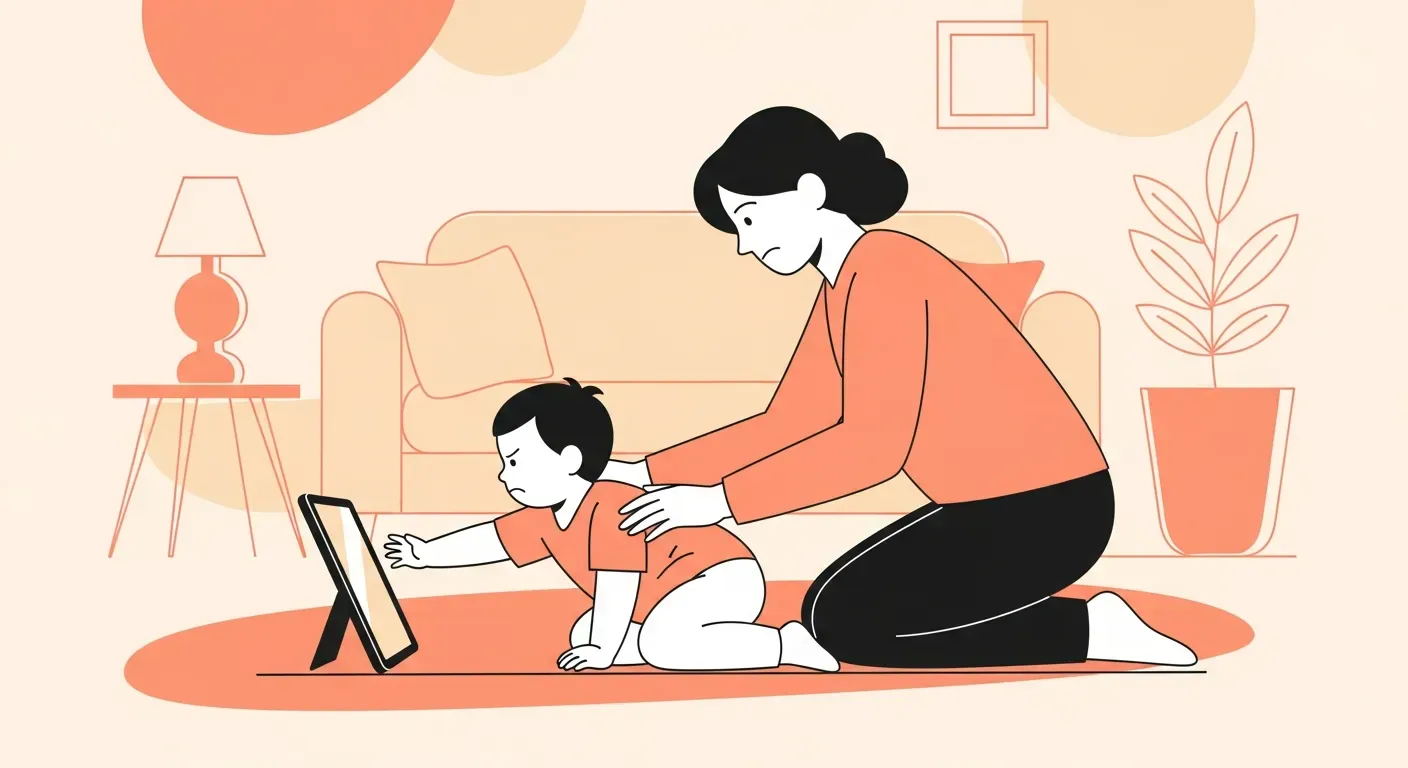
It's 5:17 PM. Dinner's half-made, your toddler is melting down, and you're holding that tablet like a lifeline. We've all been there. You hand it over, peace returns, and for a blessed 20 minutes, you can actually think straight.
But then comes the aftermath: an even bigger meltdown when screen time ends. Sound familiar? You're not imagining it, research shows this is a real cycle that over 90% of families experience.
The Cycle That Keeps Us Stuck
Here's what the latest research reveals: when 3½-year-olds spend 75+ minutes daily on tablets, they're more likely to have angry outbursts a full year later. But here's the kicker, kids prone to tantrums at age 4½ tend to increase their screen time the following year.
It's a perfect storm:
- More screens → more tantrums
- More tantrums → more screens (because we're desperate)
- Repeat until everyone's exhausted
Why Screens Make Tantrums Worse (Not Better)
When we use screens to calm big emotions, three things happen:
1. The "Quick Fix" Backfires
Handing over a device during a meltdown teaches kids that screens are the way to feel better. They never learn other coping strategies, making future tantrums more intense.
2. The Extinction Burst Is Real
Behavioral scientists have a term for what happens when you first withhold screens: an "extinction burst." Expect crying to get worse before it gets better. This isn't failure, it's progress. Your child's brain is literally rewiring itself.
3. Natural Emotion Regulation Gets Hijacked
Those crucial toddler years? They're when kids learn to handle big feelings. Regular screen-soothing can interfere with this development, potentially setting up longer-term emotional challenges.
Breaking Free: Strategies That Actually Work
Ready for the good news? You can break this cycle without becoming a "no screens ever" parent. (Not sure how much screen time is actually OK? We've got a guilt-free guide for that.) Here's what research shows actually works:
Start with Play (Yes, Really)
Studies found that kids who regularly play with real toys have fewer screen time tantrums. Not because they're "better" kids. It's because play naturally teaches frustration tolerance and emotional regulation.
Try this: Keep a basket of simple toys (blocks, crayons, Play-Doh) within easy reach for transition times.
The "Trading Up" Technique
Instead of going from high-stimulation (screen) to low-stimulation (nothing), trade up to something equally engaging. Here are some screen-free activities that actually work:
- Quick dance party to their favorite song
- 5-minute pillow fight
- Shooting baskets outside
- Making slime or Play-Doh snakes
Skip the Two-Minute Warning
Surprising research finding: giving a "two minutes until screen time ends" warning actually makes transitions harder. Kids spend those two minutes negotiating instead of mentally preparing.
Better approach: Use natural stopping points (end of an episode, completing a level) or let the device turn itself off with a timer.
Make Routines Your Secret Weapon
Kids who struggle with random screen limits often do fine when it's part of a routine. Same child, different context, completely different reaction.
Example routine: Morning cartoons end when breakfast is ready. Every day. No negotiation needed.
Create a Calm-Down Corner (Not Time-Out)
Set up a cozy space with:
- Soft blankets or beanbags
- Calming sensory items
- Picture books about feelings
- Maybe a stuffed animal "feelings friend"
Message: "Big feelings are okay. Let's reset together."
What About the Extinction Burst?
When you first reduce screen time or stop using it for emotional regulation, expect:
- Louder crying
- Longer tantrums
- More desperate pleas
This is temporary. Usually peaks within 3-5 attempts, then rapidly decreases. Each time gets easier. Promise.
Real Talk for Real Parents
Look, we're not suggesting you throw away all screens and craft your way through every meltdown. That's not realistic, and frankly, it's not necessary.
What we're saying is:
- Screens aren't evil, but they're not emotional band-aids either
- You can reduce screen tantrums without becoming a "perfect" parent
- Small changes make a big difference
- It's okay to start slowly
Your Next Steps
-
Pick ONE strategy from above. Just one. Try it for a week.
-
Expect resistance. Remember, extinction bursts are proof it's working.
-
Track what works. Every family is different. Notice what helps YOUR kid.
-
Be kind to yourself. You're unlearning patterns while teaching new ones. That's hard work.
Keep reading:
- How Much Screen Time Is Actually OK? A Guilt-Free Guide
- Screen-Free Activities That Actually Buy You 20 Minutes
- Why Bedtime Is a Battle (And How to Call a Truce)
Remember This
You're not a bad parent for using screens. You're not weak for wanting peace. You're a human raising another human in a digital world nobody quite knows how to navigate yet.
The fact that you're reading this? That means you care. And caring parents who keep trying different approaches? Those are the ones who eventually find what works.
Break the cycle one tantrum at a time. You've got this.
Need personalized strategies for your family's screen time challenges? Momwise can help you create a plan that actually works for YOUR kid (and your sanity).
Momwise handles the chaos so you don't have to
Scheduler, Meal planner, Sidekick and Househand take the calendar, dinner and to-dos off your plate. Try your village free for 3 days, no card.
You might also like
How Much Screen Time Is Actually OK? A Guilt-Free Guide
The AAP guidelines meet real life. A realistic, no-shame approach to screen time for working parents based on 2024 research.
Screen-Free Activities That Actually Buy You 20 Minutes
Practical alternatives when you need a break but don't want the meltdown after. Real activities that have been tested by tired parents.