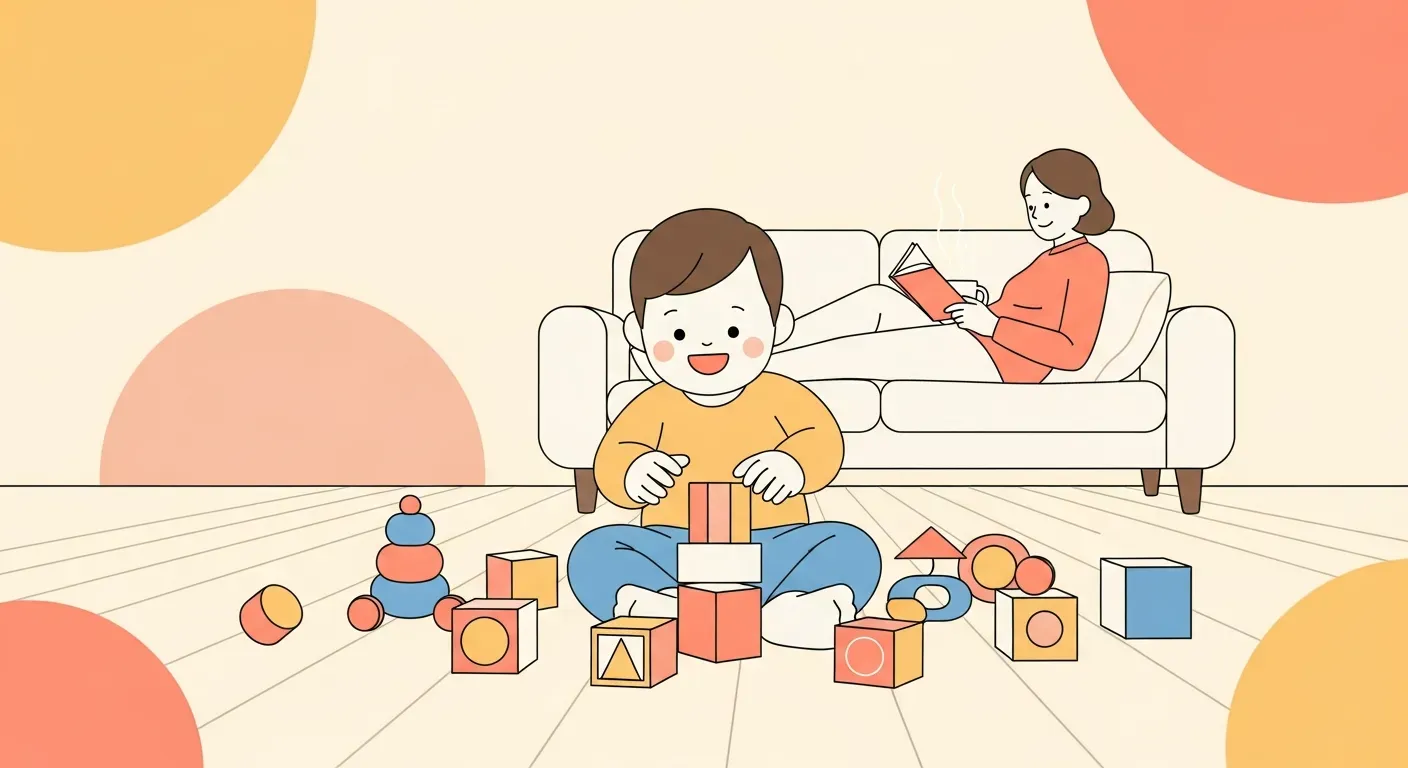
Screen-Free Activities That Actually Buy You 20 Minutes
Practical alternatives when you need a break but don't want the meltdown after. Real activities that have been tested by tired parents.
Let's be honest: sometimes you just need 20 minutes. To make dinner. To answer emails. To simply sit down and breathe. And yes, screens would be the easiest solution – but we all know how that story ends (spoiler: with a meltdown when it's time to turn it off). If you're wondering how much screen time is actually OK, we've got a guilt-free guide for that too.
The good news? There are screen-free activities that can actually keep your toddler engaged for those precious 20-30 minutes. These aren't Pinterest-perfect crafts that require an art degree to set up. These are real, practical activities tested by real, tired parents.
The Secret to Success
Before we dive into the activities, here's what makes them actually work:
- They're self-contained – Your toddler can start, do, and finish without your help
- Minimal setup – If it takes 20 minutes to set up for 20 minutes of play, that's not a win
- Low mess potential – Or at least contained mess
- Age-appropriate independence – Activities they can actually do alone at their developmental stage
Remember: independent play is a skill that develops with practice. Start with 5-10 minutes and build up over time.
Water Play (The Ultimate Engagement Tool)
The Basic Setup
- Baby bathtub on the kitchen or bathroom floor
- Towel underneath
- Various containers for pouring
- Optional: food coloring, ice cubes, bath toys
Why it works: Water is endlessly fascinating to toddlers. The sensory experience plus the cause-and-effect of pouring keeps them engaged far longer than most activities. (Love sensory play? Check out our Valentine's sensory bin ideas for more inspiration.)
Real parent tip: "My 2-year-old will transfer water between containers for 30+ minutes. I just put down towels and let him go wild."
Sensory Bins That Actually Work
Rice Bin
- Large shallow container
- Bag of cheap rice
- Scoops, cups, small toys to bury
Dried Pasta Play
- Various pasta shapes in a bin
- Kitchen utensils for scooping
- Empty containers for sorting
Pro tip: Put a cheap shower curtain or sheet under the bin. When they're done, just gather up the corners and pour everything back in.
The Magic of Masking Tape
This might sound too simple, but masking tape (or painter's tape) is toddler gold:
- Make roads on the floor for cars
- Create shapes on the wall to peel off
- Tape down toys and let them "rescue" them
- Make a "spider web" in a doorway to throw soft toys through
Why it works: It's novel, slightly challenging, and they feel like they're doing something special.
Building and Construction
Cardboard Box City
- Save delivery boxes of various sizes
- Let them stack, knock down, crawl through
- Add toy cars for extra play
Pillow Fort 2.0
- Couch cushions on the floor
- Lightweight blankets
- Clothespins or chip clips to secure
The key: Set clear boundaries about which cushions/pillows can be used, and make it a special occasion activity.
Art Station for Independent Creativity
Create a designated art area with:
- Paper taped to the table
- Washable markers/crayons
- Stickers (the puffy ones last longer)
- Glue stick and pre-cut shapes
Critical rule: Art stays at the art table. Be consistent with this boundary and it becomes a reliable activity.
Kitchen Helper Activities
Washing Station
- Step stool at the sink
- Plastic dishes and cups
- Gentle soap and sponge
Prep Cook
- Plastic cutting board
- Toddler-safe knife
- Soft items to "cut" (bananas, cheese, bread)
Safety note: Obviously, stay in the vicinity. But they can work independently while you cook nearby.
Simple Sorting and Threading
Pom-Pom Drop
- Empty water bottle
- Bag of pom-poms
- Watch them concentrate on fitting them through the opening
Pasta Threading
- Uncooked spaghetti stuck upright in playdough
- Tube pasta or cereal with holes
- Thread the items onto the spaghetti
These activities build fine motor skills while buying you time.
The Emergency Activity Stash
Keep a hidden stash of "new" activities for desperate moments:
- Dollar store sticker books
- Small new toy cars
- Activity books with mazes/coloring
- Magnetic drawing board
- New play dough color
Parent hack: "I keep a $20 emergency activity box in my closet. When I absolutely need uninterrupted time, I pull out something 'new.' Worth every penny."
Maximizing Success
Start Small
Don't expect 20 minutes right away. Build the independent play muscle gradually.
Rotation is Key
Put some activities away for a few weeks. When they come back out, they're exciting again.
Location Matters
Sometimes moving an activity to a new spot (bathroom floor, under the dining table) makes it feel brand new.
Embrace "Good Enough"
The pasta might end up everywhere. The water play might soak through the towel. If you got 20 minutes of peace, it was worth it.
When Nothing Else Works
Some days, none of these will work. Your toddler will need you every 2 minutes. That's normal too. On those days:
- Lower your expectations
- Try parallel play (you fold laundry while they play nearby)
- Remember this phase is temporary
- Consider if they need connection time first before independent play
Keep reading:
- How Much Screen Time Is Actually OK? A Guilt-Free Guide
- The Screen Time Tantrum Cycle: How to Break Free
- Valentine's Day Sensory Bins: 10 Easy Ideas
The Bottom Line
You're not looking for hours of independent play (that's what preschool is for). You're looking for realistic chunks of time that let you function as a human being. These activities work because they're simple, engaging, and don't require you to be a Pinterest parent.
Start with one or two that appeal to your toddler's interests. Keep your expectations realistic. And remember: any activity that gives you a genuine break is a good activity.
Because sometimes, 20 minutes of peace is all you need to reset and be the parent you want to be.
Tired of the "what's for dinner?" panic?
Try our free AI meal plan generator. Get a full week of family-friendly dinners in 60 seconds. No signup required.
You might also like
Outdoor Activities by Age: From Crawler to Kindergartener
Developmentally appropriate outdoor play ideas that actually match what your child can do right now. Age-banded activities from 6 months to 5 years that make outdoor time easier and more fun.
Valentine's Day Activities by Age: From Baby to Big Kid
Age-appropriate valentine activities by age kids love. From sensory play for babies to STEM challenges for big kids, find the perfect Valentine's Day activity for your child's developmental stage.
15 Valentine's Day Crafts Your Toddler Can Actually Do
Realistic Valentine crafts toddlers easy enough for little hands. No Pinterest-perfect pressure - just simple, fun activities your toddler can actually participate in.