How Much Screen Time Is Actually OK? A Guilt-Free Guide
The AAP guidelines meet real life. A realistic, no-shame approach to screen time for working parents based on 2024 research.
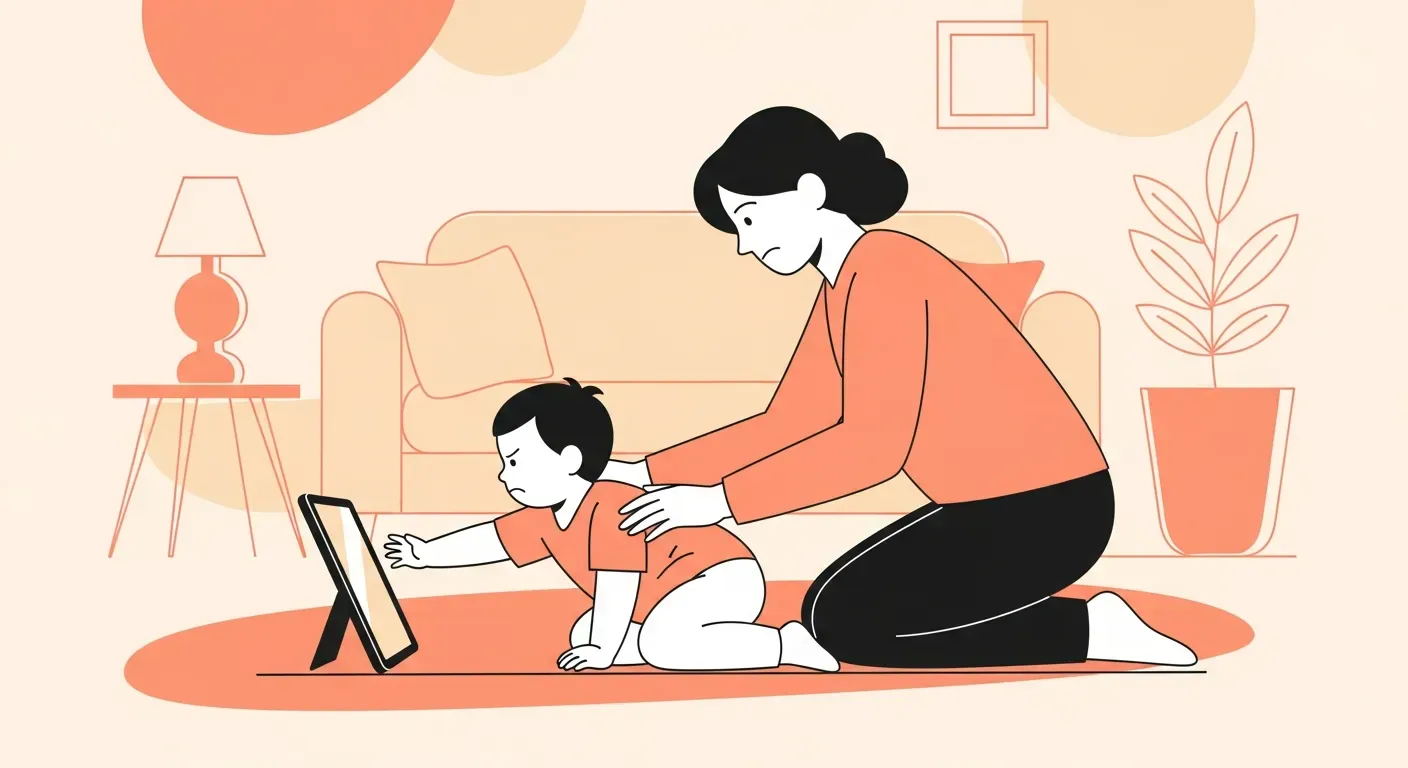
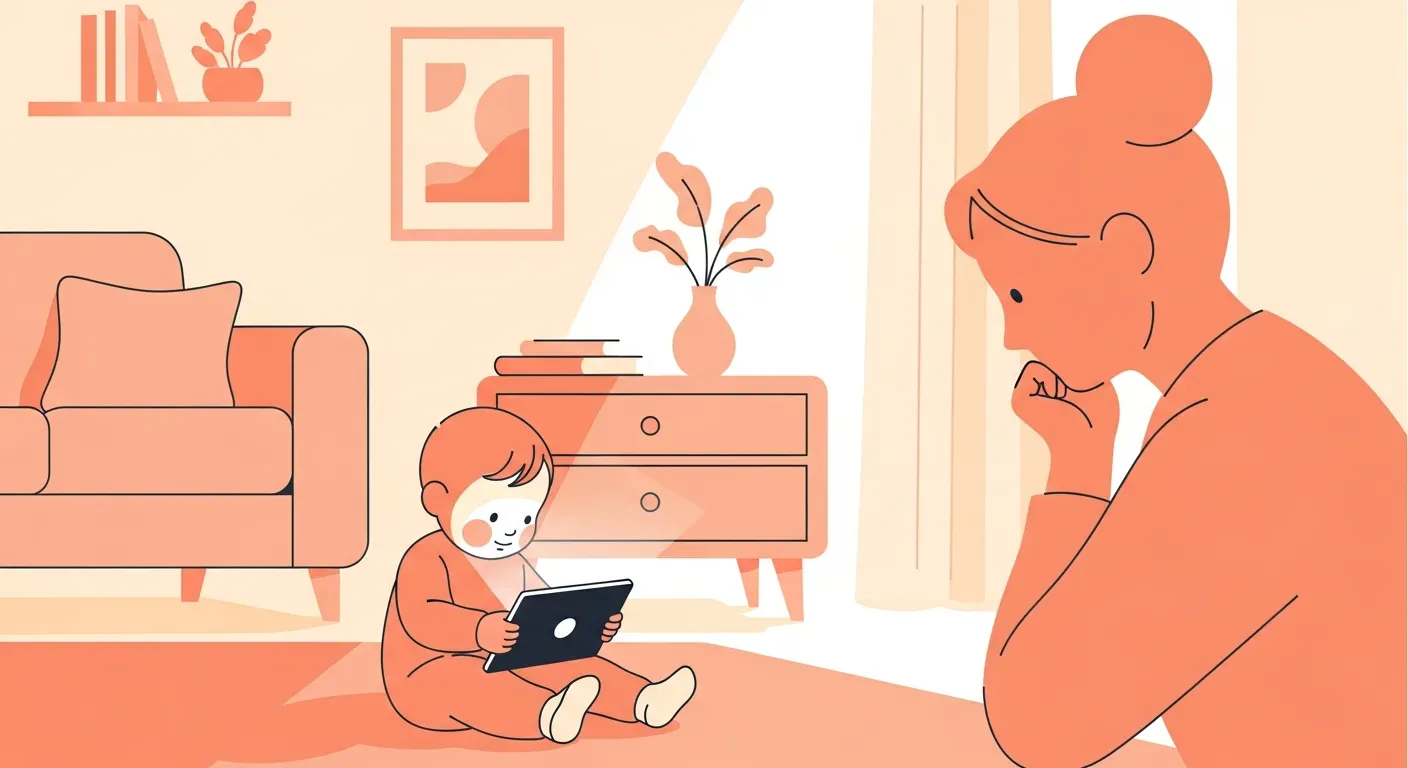
Let's be honest: if you're reading this on your phone while your toddler watches Daniel Tiger, you're not alone. And according to the latest research, you don't need to feel guilty about it.
The conversation around screen time has shifted dramatically in 2024. Instead of strict prohibitions that leave parents feeling like failures, experts are now advocating for a more realistic, family-centered approach. Here's what the research really says, and how to make it work in your actual life.
What the AAP Actually Says (2024 Update)
The American Academy of Pediatrics has evolved their stance significantly. While the basic age recommendations remain:
- Under 18 months: Avoid screens except for video chatting
- 18-24 months: High-quality programming with parent participation
- 2-5 years: No more than 1 hour daily of quality content
But here's the game-changer: They've introduced the "5 Cs Framework" that shifts focus from time limits to healthy media habits. It's not about avoiding screens, it's about using them wisely.
The Research That Changes Everything
A groundbreaking 2024 study found something surprising: parental guilt about screen time actually causes more harm than the screen time itself. When parents feel guilty, their stress increases, which affects the parent-child relationship more negatively than the actual screen exposure.
Even more telling? Objective measurements show that by 6 months, babies average 1 hour 16 minutes of screen time daily, increasing to 2 hours 28 minutes by age 2. Most families exceed guidelines, and that's okay.
Quality Really Does Matter
Not all screen time is created equal. Research consistently shows that educational programming like PBS Kids shows can actually teach toddlers:
- Emotional regulation skills
- Basic academic concepts
- Social behaviors
- Problem-solving strategies
The key? Content matters more than minutes.
A Realistic Approach for Working Parents
1. Ditch the Guilt, Focus on Balance
Studies show that parental stress and guilt create a worse environment for kids than moderate screen use. Give yourself permission to use screens as a tool when needed.
2. Create "High-Value" Screen Time
When your toddler does watch:
- Choose educational content (Daniel Tiger, Bluey, Sesame Street)
- Sit with them when possible
- Talk about what they're watching
- Use it as a springboard for real-world activities
3. Set Realistic Boundaries
Instead of impossible "no-screen" goals:
- Create screen-free zones (bedtime, meals)
- Use timers to create predictable limits
- Have a "screen time routine" that works for your family
- Focus on what you're adding (outdoor time, reading, screen-free activities that buy you 20 minutes) rather than just subtracting
4. The Co-Viewing Compromise
Can't always watch together? That's okay. Try:
- Watching the first 5 minutes together
- Asking about their show during dinner
- Playing games based on their favorite characters
- Using what they watched as conversation starters
What Really Matters: The Bigger Picture
Recent research emphasizes that screen time effects depend heavily on:
- Context: Screens during dinner? Problematic. Educational show while you cook? Probably fine.
- Content: Choose programs designed for learning over passive entertainment
- Connection: Even 5 minutes of engaged interaction about a show beats 30 minutes of parallel screen time
- Consistency: Regular routines reduce battles and anxiety for everyone
Your Personalized Plan
Here's a template that real families actually follow:
Morning: Screen-free until after breakfast (builds better habits) Midday: 30-45 minutes of quality programming while you prep lunch Afternoon: Outdoor time or activities (crowd out screens naturally) Evening: 20-30 minutes while making dinner (your sanity matters) Bedtime: Screen-free wind-down starting 1 hour before sleep
Adjust based on YOUR family's needs. Working late? Add 15 minutes. Sick day? Survival mode is okay.
Red Flags to Actually Worry About
Focus your energy on preventing these proven concerns:
- Screens replacing sleep time
- Devices during meals becoming the norm
- Using screens as the only soothing method (watch out for the screen time tantrum cycle)
- Background TV constantly on
- No screen-free times in your day
The Bottom Line
The 2024 research is clear: moderate, thoughtful screen use isn't harming our kids. What IS harmful? Stressed, guilty parents trying to meet impossible standards.
Your toddler watching Bluey while you answer work emails isn't ideal, but it's real life. And real life is where good-enough parenting happens.
Keep reading:
- The Screen Time Tantrum Cycle: How to Break Free
- Screen-Free Activities That Actually Buy You 20 Minutes
- The 5-Minute Bedtime Routine That Actually Works
Action Steps for Today
- Choose one screen-free zone (meals are easiest to start)
- Identify your "high-quality" show list
- Set one consistent screen time routine
- Practice self-compassion when plans go sideways
Remember: You're not aiming for perfection. You're aiming for balance in a world where screens are everywhere. And according to the latest research? You're probably doing better than you think.
Want personalized screen time strategies that work with your family's schedule? Momwise can help you create realistic routines that actually stick, without the guilt.
Momwise handles the chaos so you don't have to
Scheduler, Meal planner, Sidekick and Househand take the calendar, dinner and to-dos off your plate. Try your village free for 3 days, no card.